 Reviews



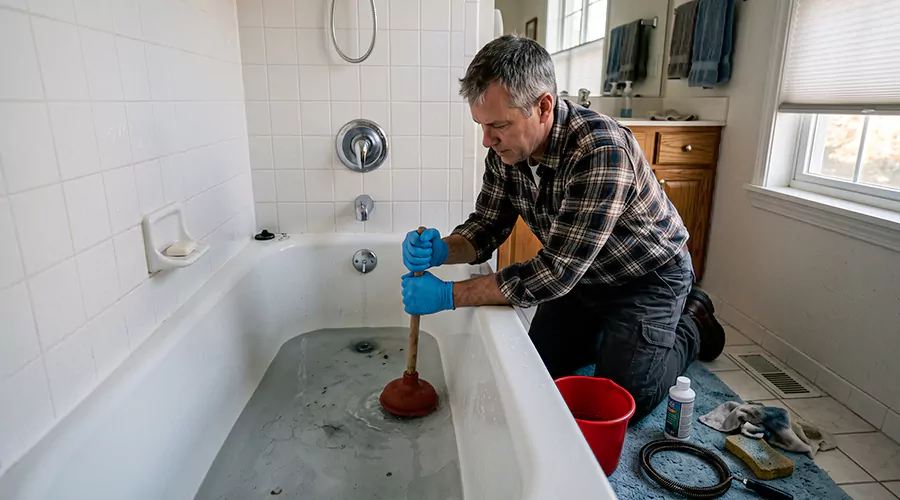
A blocked drain can often be fixed by removing trapped debris or using a plunger before attempting deeper mechanical clearing. Professional drain cleaning costs between $147 and $352 in the United States according to August 2026 pricing data. The national average is approximately $246. Drain services can provide professional cleaning and clearing when a blockage persists or requires deeper inspection.
The correct method depends on the location of the blockage. Hair commonly collects inside bathroom drains. Kitchen drains are more likely to develop grease buildup. When several fixtures stop draining together, the obstruction may be located farther into the plumbing system.
Knowing how to fix a blocked drain starts with identifying the affected fixtures and preventing additional water from entering the restricted pipe.
What Should You Do First When a Drain Is Blocked?
Stop using the affected fixture and remove standing water before attempting to clear the blockage. Adding more water can cause an overflow when the drain has stopped completely. A clear working area also makes it easier to inspect the opening and select the appropriate tool.
Take these precautions before beginning:
- Stop the incoming water: Turn off the faucet or shower and allow any remaining water to settle.
- Check nearby fixtures: Determine whether the problem affects one drain or several connected fixtures.
- Remove standing water: Use a suitable container if the basin is nearly full.
- Protect the surrounding area: Place old towels around the fixture and beneath accessible plumbing.
- Wear protective equipment: Use waterproof gloves and suitable eye protection.
- Check for chemicals: Do not plunge or open plumbing containing an unknown chemical drain cleaner.
If sewage is entering multiple fixtures, stop using the connected plumbing. Sewage can contain harmful microorganisms and should not be treated like an ordinary household spill.
What Causes a Drain to Become Completely Blocked?
A drain becomes blocked when accumulated material closes the available opening inside the waste pipe. The obstruction may form gradually as residue builds up or suddenly when a solid object becomes trapped. The type of fixture often provides the first useful clue about the material involved.
Common causes include:
- Hair buildup: Loose hair catches around bathroom drain components and collects additional strands.
- Soap residue: Sticky deposits attach to hair and make existing obstructions denser.
- Cooking grease: Liquid grease cools inside drainage pipes and traps food particles.
- Food waste: Solid material can collect inside kitchen sink traps.
- Foreign objects: Small household items may lodge inside a drain.
- Unsuitable flushed materials: Wipes can accumulate in toilet drains and shared waste piping.
- Existing pipe restrictions: Older deposits or damaged piping can reduce the available opening.
The EPA recommends keeping cooking grease and inappropriate solid waste out of household drains. These materials can contribute to blockages and wastewater-system problems.
How Does a Drain Blockage Get Worse?
A drain blockage normally progresses from reduced water flow to a complete stoppage as additional material collects. During the early stage, water can still pass through the remaining opening. Continued use gradually increases the obstruction until normal drainage becomes impossible.
The following table compares common stages with reported 2026 U.S. repair costs.
| Blockage Stage | Typical Symptoms | Appropriate Response | Potential Cost |
|---|---|---|---|
| Early restriction | Slightly slower drainage | Remove accessible debris | Usually DIY |
| Partial blockage | Water pools during use | Plunger or manual cleaning | Usually DIY |
| Complete blockage | Standing water remains | Mechanical clearing | 147–352 for typical professional cleaning |
| Deeper obstruction | Several fixtures affected | Investigate shared drainage | Can exceed routine cleaning |
| Main sewer blockage | Wastewater returns through low fixtures | Main-line diagnosis | $380 average main-line clog repair |
The 2026 national average for main sewer line clog repair is approximately $380. Actual costs depend on access and the clearing method.
The distinction between a local blockage and a shared drainage problem matters because the same clearing method will not necessarily work for both.
What Warning Signs Suggest a Serious Blockage?
A serious blockage often produces symptoms beyond slow drainage. Standing water that does not move suggests a severe local restriction. Water returning through another fixture can indicate that wastewater cannot pass through a shared section of piping.
Watch for these warning signs:
- Standing water remains for several minutes. The opening may be almost completely closed.
- Water rises immediately during use. Incoming water exceeds the remaining drain capacity.
- The blockage returns quickly. Material may remain inside the pipe.
- Several fixtures drain slowly. A shared branch may be restricted.
- The toilet causes shower backup. The problem may extend beyond either fixture.
- Gurgling occurs in multiple drains. Air movement inside connected piping has changed.
- Dirty water returns through the drain. Wastewater may be backing up from farther downstream.
- Plunging produces no improvement. The obstruction may be too dense or too deep.
- A manual auger repeatedly meets resistance. The cable may be reaching a hard obstruction or pipe defect.
- Sewage appears inside the property. The problem requires additional safety precautions.
Multiple affected fixtures deserve particular attention because they can indicate a restriction outside the individual sink or shower.
How Can You Identify Where the Blockage Is Located?
A staged inspection can help identify whether the obstruction is near the fixture or deeper inside the drainage system. Start by observing which fixtures are affected. Then inspect accessible components without dismantling unnecessary sections of plumbing.
Use this diagnostic sequence:
- Check whether the problem affects only one fixture.
- Remove the affected drain's stopper or strainer.
- Inspect the opening with a flashlight.
- Remove visible material without pushing it farther inside.
- Test drainage with a small amount of water.
- Inspect an accessible P-trap if the drain remains blocked.
- Stop adding water if another fixture begins backing up.
The P-trap is a useful inspection point because it sits close to the fixture and can collect debris. A completely clean trap combined with continued backup suggests that the restriction is farther downstream.
This approach also avoids unnecessary plumbing disassembly when the problem is simply hair wrapped around a stopper.
How Do You Fix a Blocked Drain Step by Step?
The safest repair sequence starts with accessible debris and progresses to deeper mechanical methods only when necessary. Physical removal is particularly useful because it takes obstructing material out of the drainage system rather than simply opening a narrow path through it.
Step 1: Remove Visible Debris
Remove the drain cover or stopper according to its design. Inspect the opening and pull out accessible material with a suitable tool.
A flexible plastic hair-removal strip works well for many shallow bathroom blockages. Dispose of the material in the trash rather than washing it into another drain.
Test the drain after cleaning.
Step 2: Use a Suitable Plunger
A flat cup plunger can clear nearby soft obstructions inside many sink drains.
- Leave enough water to cover the rubber cup.
- Seal the overflow opening when applicable.
- Cover the unused opening on a double sink.
- Center the plunger over the drain.
- Begin with gentle pressure.
- Use controlled pushing and pulling movements.
- Check the water level after several strokes.
If the sink connects to a dishwasher, take precautions against forcing wastewater into the appliance's drain connection.
Mechanical plunging is a standard initial method for sink blockages.
Step 3: Inspect the P-Trap
When plunging fails, inspect the curved drain section beneath the sink.
Place a bucket underneath before loosening the connections. Remove the trap carefully and empty its contents.
Clean the interior and check the condition of the washers. Reinstall the trap correctly before testing the sink.
Do not overtighten plastic connections because excessive pressure can damage the fittings.
Step 4: Use a Manual Drain Snake
A drain snake can reach obstructions beyond the P-trap.
Insert the cable into the appropriate drain opening and advance it gradually. Rotate the handle when resistance appears.
Work the cable gently rather than forcing it forward. Withdraw the tool slowly and remove any captured material.
For many sinks, removing the P-trap provides direct access to the pipe entering the wall.
What Should You Avoid When Clearing a Blocked Drain?
Repeated chemical treatments and excessive mechanical force can create additional problems without removing the underlying obstruction. A safer approach uses controlled mechanical clearing and stops when the tool encounters resistance that cannot be identified.
Avoid these common mistakes:
- Mixing different commercial drain cleaners.
- Combining bleach with other household cleaning chemicals.
- Opening a P-trap containing unknown chemical products.
- Forcing an auger through persistent hard resistance.
- Pouring additional water into a completely blocked fixture.
- Using boiling water when the pipe material or joint condition is uncertain.
- Continuing to use other fixtures during a suspected sewage backup.
Never use a drain snake after applying chemical drain cleaner unless the chemical hazard has been properly addressed. The cleaner can splash onto your skin or into your eyes during mechanical work.
How Can You Confirm the Drain Is Clear?
A successful repair should restore consistent drainage during normal fixture use. A temporary improvement is insufficient because a small remaining opening can pass limited water while the rest of the obstruction continues collecting material.
Test the repair in stages:
- Reassemble all removed components.
- Run a small amount of water.
- Inspect accessible connections for leaks.
- Increase the water flow gradually.
- Continue testing at the fixture's normal flow rate.
- Check whether water begins collecting again.
- Observe the fixture during its next normal use.
A sink should accept a partly filled basin without prolonged backup. A shower should drain continuously without an expanding puddle.
When Should You Call a Professional?
Professional drain cleaning becomes appropriate when the blockage remains beyond the reach of household tools or several fixtures show drainage problems. These conditions can indicate a deeper obstruction that requires specialized access or equipment.
Typical professional drain cleaning costs between $147 and $352 in the United States in 2026.
Professional diagnosis is appropriate when:
- Multiple household drains are blocked.
- Wastewater returns through another fixture.
- A manual auger cannot restore drainage.
- The same blockage repeatedly returns.
- Accessible drain pipes show damage.
- Sewage backs up into the home.
A professional can investigate deeper sections of the drainage system when ordinary fixture-level methods fail.
How Can You Prevent Another Blocked Drain?
Preventing blockages starts with reducing the amount of solid material entering household drains. Regular cleaning also prevents smaller accumulations from becoming severe restrictions. Maintenance should reflect the material that normally enters each fixture.
Recommended habits include:
- Clean bathroom drain stoppers regularly.
- Use hair-catching screens in showers.
- Remove food from kitchen strainers.
- Dispose of cooking grease separately.
- Flush only appropriate waste and toilet paper.
- Investigate slow drainage before standing water develops.
- Inspect recurring blockages instead of repeatedly treating the same symptom.
Portland's wastewater authority warns that wipes and cooking grease contribute to sewer blockages. Keeping these materials out of drains reduces preventable problems.
Conclusion
Knowing how to fix a blocked drain starts with identifying the obstruction and preventing additional water from entering the restricted pipe. Remove accessible debris before plunging or snaking. Test drainage after each method instead of assuming one improvement means the problem has disappeared. If several fixtures back up together or the blockage remains beyond household-tool reach, professional diagnosis may be appropriate. This week, check your drain covers and remove accumulated debris.
Frequently Asked Questions
Can a completely blocked drain clear itself?
Some soft material may break apart naturally. A dense obstruction or solid object generally requires removal.
Should I use boiling water on a blocked drain?
Avoid boiling water when the pipe material is uncertain. Extreme heat can damage some plastic plumbing components.
Why does my drain block again after plunging?
The plunger may have opened a small passage while leaving most of the obstruction inside the pipe.
Can a blockage affect several drains?
Yes. A restriction inside shared drainage piping can affect multiple connected fixtures.
Is a drain snake suitable for every blockage?
No. The correct tool depends on the fixture and pipe condition. A suspected main-line problem requires a different approach.